Both weeks sit in the Baltic. Both run about 30 to 45 miles a day on lanes with little traffic. Both put you in a hotel or an inn every night and move your bag ahead of you. The request that arrives here is usually one sentence long: a flat cycling week in the north, nothing technical, somewhere with sea in it. That sentence describes the Aland islands or Funen equally well, which is why the two are so often named in the same breath, and why the office keeps writing back with the same question before quoting anything.
What the request almost never contains is a stance on being timetabled. That is the whole of it. One of these weeks is an archipelago and moves by boat; the other is a single large island stitched to smaller ones by fixed spans. Everything the two weeks differ on afterward, and there is a lot, comes downstream of that.
The two halves, set on the same axes
aland
Aland sits about 25 miles off the Swedish coast in the Baltic and is reached by an overnight or daytime crossing rather than a bridge, so arrival day is a travel day; total ascent across six days is under 1,400 feet against Funen's rolling interior; the season is short, roughly early June to the first week of September, and several island ferries drop to two sailings a day outside July; the figure here is $2,410 per person against a different figure on the Funen page, and the gap is mostly the boats.
from $2,410 per person
funen
Funen is rolling and Aland is not: expect 900 to 1,600 feet of ascent on the bigger days here, against ground that rarely lifts more than 200 feet at a time on the other week. Crossings here are fixed bridges of a few hundred feet ridden in under two minutes, not scheduled boats. The season runs late April to mid October, roughly six months, and it is reached by a two hour train from Copenhagen airport to Odense rather than by ferry or a connecting flight. This week costs $2,270 and runs six nights; the two prices sit within a few hundred dollars of each other.
from $2,270 per person
Two figures set beside each other are two facts about two different trips of different lengths, run by different companies, in different seasons. Neither figure is offered as the better value and this office will not say that one is. What each covers is listed on its own page.
Boats keep a schedule and bridges do not
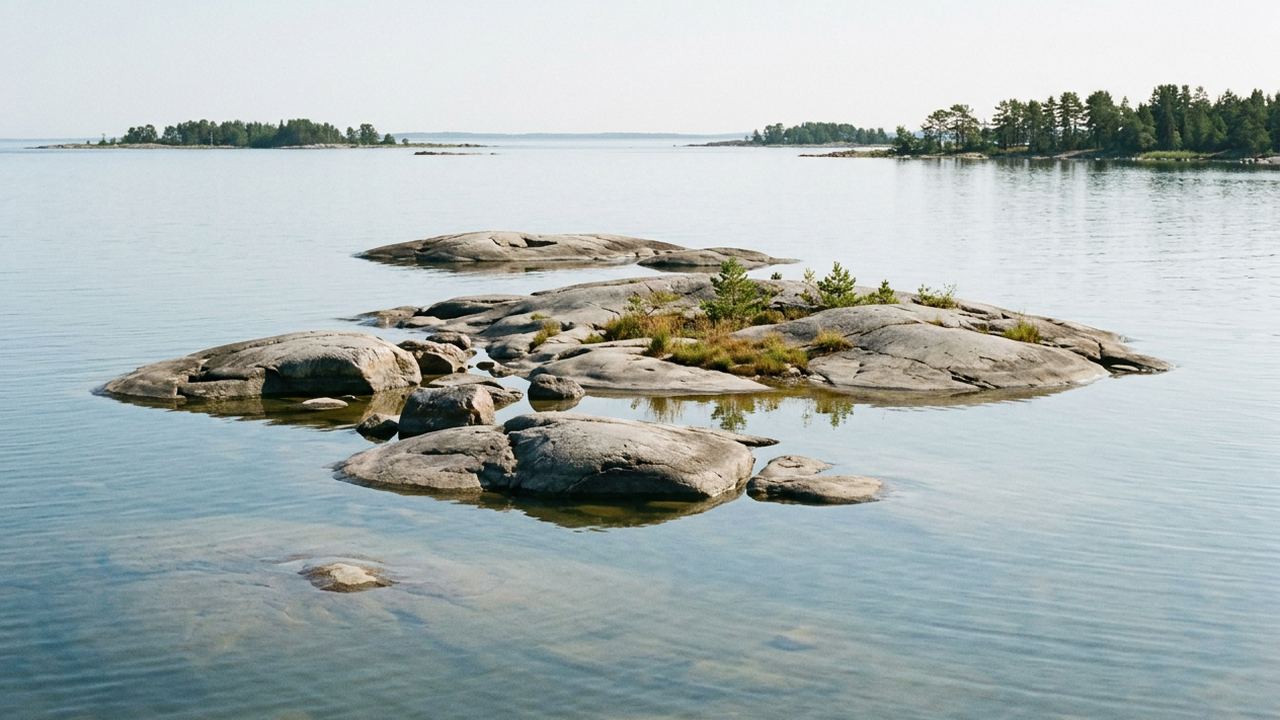
On the Aland route, five of the seven riding days include at least one inter island crossing. The short cable ferries in the middle of the archipelago run frequently, often every 30 minutes or so, and cost nothing to ride. The longer trunk crossings out to the eastern and northern islands are a different animal: two or three sailings a day, an hour to two and a half hours in the water, and a booking that has to be made in advance for a bicycle in high summer. Miss one and the next is not in twenty minutes, it is in five hours or tomorrow. That converts the day from a ride into an appointment. Riders who like this say the boats are the trip: you get off the saddle, you eat, you watch the skerries go past, you land somewhere that could not be reached any other way.
Funen has no such clock in it. The island is joined to its neighbors by fixed road bridges and causeways, and the small connector to Tasinge and Langeland is simply road. You can leave at seven or at eleven, stop for two hours in Faaborg, and the route does not care. Two of the seven days offer an optional short ferry to a smaller island, and those are optional in the real sense: the week works if you skip both.
The practical shape of it is that Aland gives you a firm framework with wide, pleasant gaps in it, and Funen gives you a blank day you fill yourself. Neither of those is a fault. They ask different things of a person.
Where the two weeks stop resembling each other
roughly mid May to mid September, with the outer island sailings thinning sharply either side of thatseason
roughly April into October, with a workable shoulder in both directions and no sailing dependency
flat to gently undulating, longest sustained climb under 200 feet, wind off the water is the real resistanceterrain
rolling, with short pitches around 5 to 8 percent in the south near Svendborg and a genuinely flat north
ferry from Stockholm or Turku, 5 to 6 hours, or a short flight into Mariehamn; no route avoids a boatgetting there
train into Odense from Copenhagen in about 1 hour 20 minutes, bicycles carried with a reservation
Swedish is the official language of the islands and English is widely spoken in hotels and cafeslanguage
Danish, with English general in tourism and near universal among people under 40
25 to 40 miles, with two days shortened deliberately because a two hour sailing sits inside themdaily distance
30 to 50 miles, and the flexible ones can be extended by a Langeland loop of about 22 miles
small guesthouses and family run hotels, often the only one in the village, 7 nightswhere you sleep
inns, manor houses and town hotels in Odense, Faaborg and Svendborg, 7 nights
hybrid with luggage rack included; electric assist available on request at a stated supplementbicycle
hybrid or road geometry, electric assist available, and the rolling south is where riders most often take it
Two requests that point somewhere else entirely
Some people arrive at this comparison because they have half a different trip in their head. It is worth naming those before either week gets quoted, because the desk would rather redirect the request than sell the wrong seven days.
The decision stays with you
This office is not going to tell you which of the two to take, and any page that did would be guessing at the one thing it cannot see, which is how you feel at eight in the morning with a boat at nine forty. What the desk will do is take your dates, check what actually sails and what is actually open in that specific window, and put both weeks in writing on the same sheet, with the per person figure, what is in it, what is not, and where each figure could still move before it is confirmed. Then you read two columns instead of one argument. Write in with your dates, the number of riders, and whether you want electric assist, and both quotes come back together.