Most people asking about Arran are asking about two hours of their day rather than the island itself. They have looked at a map of western Scotland, seen a long list of islands, and want to know which one they can actually reach without giving up a day at each end. That is the honest answer here: Ardrossan is 32 miles from Glasgow by train or road, the crossing is 55 minutes, and a car that leaves Glasgow in the morning can be parked outside a house in Lamlash by early afternoon. Book an island week on Arran and the travel is largely over on the first day.
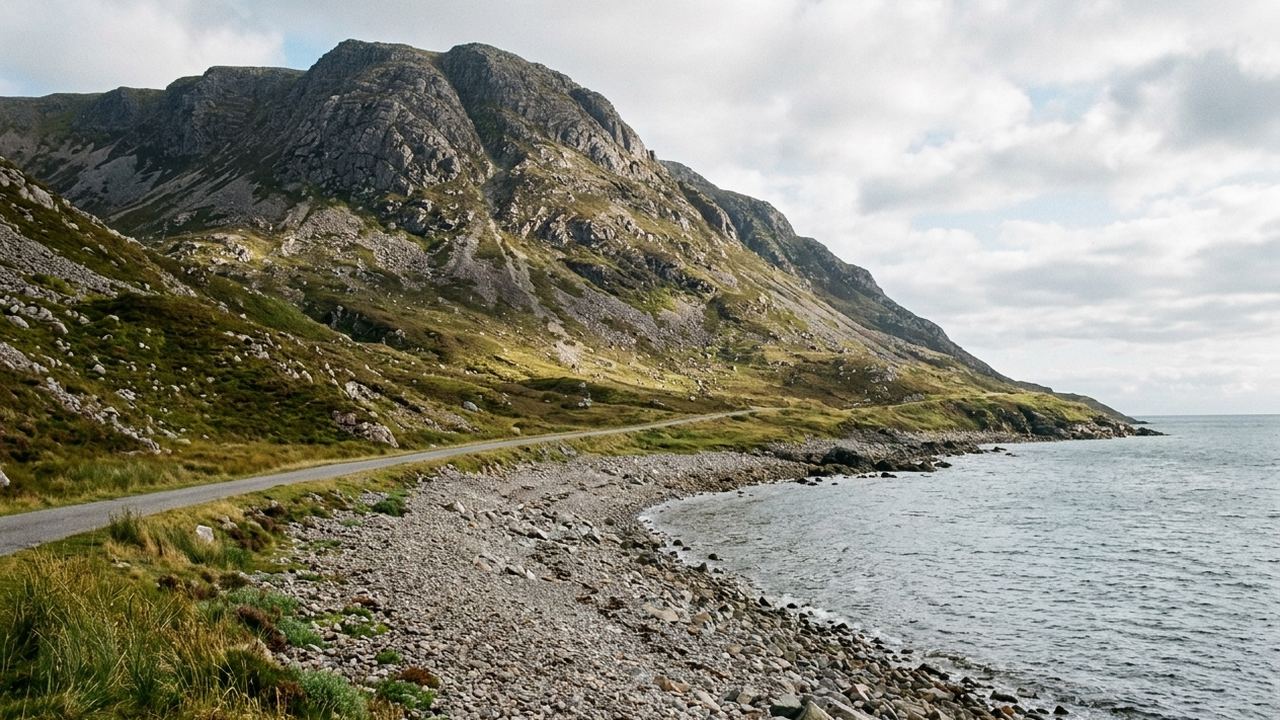
What they find is not one landscape but two, with a line across the middle. North of the String road the ground is granite, folded into ridges that top out at 2,866 feet on Goat Fell, and the roads run along the edge of it because there is nowhere else for them to go. South of that line the island is farmland, low hills, hedged fields and beaches, and it looks like the Ayrshire coast it faces. People who came for the mountains sometimes spend most of the week in the south. People who came for the beaches climb.
The other thing they find is that the island is small enough to argue with. Nineteen miles top to bottom, ten across, 56 miles of road around the whole thing. A full circuit with three stops is a comfortable day. That single fact is what makes this a six night trip from one base rather than a moving one.
- What the week is
- One rented house or room on the east coast, a hire car collected on the island, six nights, no packing up in the middle.
- What sets it apart
- Crossing is 55 minutes from Ardrossan against roughly 45 minutes from Oban plus the drive to Oban itself; the coast road is 56 miles and closes the loop, so no day needs a second ferry; Goat Fell is 2,866 feet and the standard path up and back is about five hours; the island is 19 miles by 10, which is why one base covers it and why the week costs $2,120 rather than more.
- What the figure covers
- Six nights in one property on the east coast; return vehicle deck space on the Ardrossan crossing for the dates booked; a hire car collected at Brodick and returned there; a written route sheet with parking notes for eight walks and three coast stops; a named contact for the week; all local taxes on the accommodation.
- What it leaves to you
- Flights or rail to Glasgow and the connecting train or drive to Ardrossan; fuel; all food and drink, including breakfast unless the property states otherwise; entry to distilleries, gardens, castles and any paid site; the ferry to Lochranza and Kintyre if you decide to take it mid week; walking gear, waterproofs and boots; any guide or instructor; anything you add after the figure is written.
- Who this one is wrong for
- Anyone who does not want to drive on single track sections with passing places on the west coast; anyone hoping for a week without rain, since the island gets wet in every month; anyone who wants a different island every two days, because this is one base and one island; anyone who wants the high ground in December or January, when the granite tops carry snow and the light is gone by half past three.
Granite in the north, fields in the south, and 56 miles of road around both
The coast road is the spine of the week. It is two lanes for most of its length on the east and north, and it narrows on the west between Machrie and Blackwaterfoot, with passing places and a few blind rises. Driving the full loop without stopping takes about two hours. Nobody drives it without stopping. Realistically it is a five to six hour day with a walk on the Machrie Moor standing stones, lunch somewhere on the west side, and the run back over the Boguillie past Lochranza.
Goat Fell is the walk people arrive planning. The usual route from Cladach is about four and a half miles up and back with 2,700 feet of ascent, and most parties take four and a half to five and a half hours. The upper section is boulder and granite slab, and it is exposed to wind from the moment the ridge is reached. The Glen Rosa approach adds distance and takes the pressure off the descent. Below the tops, Glen Sannox and Glen Rosa are both flat walk ins on rough path for two or three miles, which is what people do on the days the cloud is on the summits.
The south is a different set of legs. Kildonan and Whiting Bay give flat coast walking on sand and shingle, the Glenashdale Falls circuit is about three miles with 500 feet of climb through woodland, and the lanes inland from Lagg are quiet enough to walk. Four of the eight walks on the route sheet involve no climbing at all.
The people who arrive here having meant somewhere else
Half the questions this office gets about Arran are really questions about a different island, and half the questions about other islands turn out to describe this one. Naming the mismatch early saves everybody a week.
Twelve months on a small island, and what each block of them does
Weather here is Atlantic and it does not follow a tidy calendar, but the pressure on beds and on the vehicle deck does. Summer sailings fill for cars long before they fill for foot passengers, and the last two weeks of July and the first of August are the tightest of the year. Spring and early autumn are when this week is easiest to arrange and when the light is longest against the crowds.
- April and May
- Driest stretch of the year, highs in the low 50s F, gorse out along the coast road, tops still holding old snow in patches
- June
- Long light until after 10pm, midges beginning on still evenings inland, ferry car space starting to go
- Mid July to mid August
- Highs around 65 F, busiest roads and beds, vehicle deck space often gone six to eight weeks ahead
- September and early October
- Highs in the high 50s F, hills clear more often than in August, quiet villages, colour in Glen Rosa
- November to February
- Highs around 43 F, dark by 4pm in December, tops under snow and ice, several west coast pull ins closed by wind blown shingle
- March
- Cold and bright or cold and wet with little in between; accommodation at its season low and the least reliable weather on the hill
From your message to a written figure
- 1. You write
- You say which weeks you are looking at and how many people, and whether anyone in the party will not be driving. A message is opened before the working day ends
- 2. We check the crossing first
- Vehicle deck space on your dates decides everything else, so it is looked at before any property. If your dates are full for a car we say so and offer the nearest weeks that are not
- 3. We put the week together
- One property on the east coast, a car for the six nights, the route sheet built around what your party said it wants to walk
- 4. You get a figure in writing
- Itemized, with what is in it and what is not, and it takes two to four working days. Nothing is held or charged before you say yes
Ask us about the crossing before anything else
If you tell us your dates and your party size, we can tell you within a day whether a car can get across on those dates. That single answer settles most of the week, and it costs you nothing to ask.